Some sales jobs end with a signed contract. In senior living, a good day ends with a family that finally feels like they can breathe again.
If you are looking at senior living sales jobs, or you just started one, this guide is for you. Most of it covers what top reps actually do: their habits, their first 90 days and the numbers they watch. After that, we cover the common job titles, how pay usually works and how to get hired.
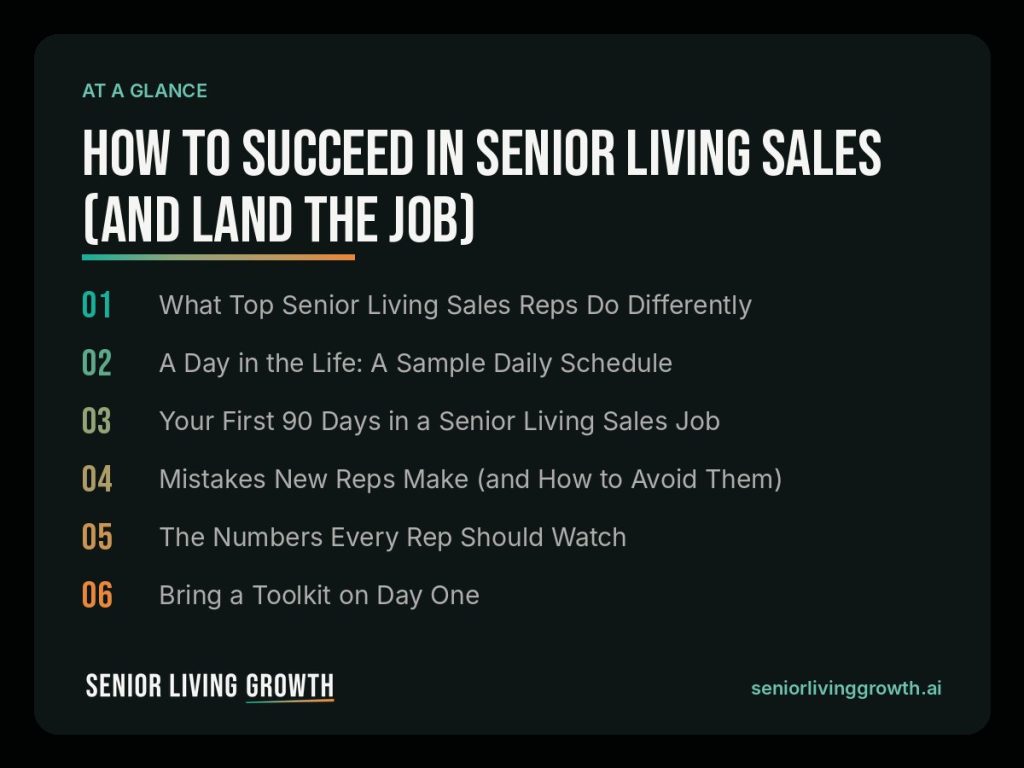
What Top Senior Living Sales Reps Do Differently
The best reps are rarely the smoothest talkers. They are the most reliable. Here are the habits that set them apart.
They answer fast
A worried family often calls several communities in one afternoon. Top reps pick up, call back within minutes or send a quick text when they can’t. Being first to respond is the easiest edge you will ever get.
They learn the story before they sell
Families don’t call because they want a two-bedroom apartment. They call because Mom fell, Dad stopped eating or a daughter is worn out from caregiving. Great reps ask open questions and listen for the real reason behind the call.
They give tours for one person, not for everyone
If the family said Dad loves gardening, the tour stops at the garden and he meets the resident who runs it. A tour built around one person’s life feels personal. A tour of hallways feels like a sales pitch.
They follow up like they said they would
Most moves happen weeks or months after the first call. Top reps keep in touch with kind, useful messages instead of “just checking in.” They write down what they promised and keep every promise.
They show up for referral partners
Case managers, social workers, home health teams and placement agents meet families before you do. Great reps make those partners’ jobs easier by answering quickly, being honest about fit and saying thank you.
They take care of themselves
This work is meaningful, and it can be heavy. You will meet families in hard moments, and residents you grow close to will pass away. Top reps lean on their team, keep healthy routines and remember why the work matters.
A Day in the Life: A Sample Daily Schedule
No two days are the same, and a family in crisis can change your plans at 9:05 a.m. Still, reps in senior living sales jobs who protect a basic routine get more done. Here is a sample day you can adjust to your community’s hours.
- 8:30 a.m.: Check every new inquiry that came in overnight. Call or text each one back first, before anything else.
- 9:00 a.m.: Quick huddle with the wellness or care team about upcoming move-ins, assessments and any families with questions.
- 9:30 a.m.: Follow-up block. Work through the families you promised to call today. Write a short note after each one.
- 11:00 a.m.: Tour. Plan it around lunch when you can, so the family tastes the food and sees the dining room full.
- 1:00 p.m.: Outreach. Visit a referral partner, drop off an updated availability sheet or call a placement agent.
- 3:00 p.m.: Second tour, an assessment visit or move-in paperwork.
- 4:30 p.m.: Check for new inquiries again, update every lead’s notes and set tomorrow’s follow-up list.
The rule that matters most: new inquiries come first, every time. Paperwork can wait ten minutes. A worried family who just reached out may not.
Once a week, add one more block: a short review of your numbers and open leads with your director. Fifteen honest minutes on what is working and what is stuck will teach you more than a month of guessing. Bring your list of families who went quiet and decide together who to call next.
Your First 90 Days in a Senior Living Sales Job
A clear plan for your first three months helps you earn trust fast and avoid early mistakes.
Days 1 to 30: Learn
- Learn the building. Eat in the dining room, join activities and talk to residents.
- Learn the care. Sit with the nurse or wellness director and understand what your community can and can’t do.
- Learn the market. Call or visit nearby communities so you know your competition.
- Learn the leads. Read every open lead’s notes and find out where each family stands.
Days 31 to 60: Build
- Set up your daily routine: new inquiries first, then follow-up, then outreach.
- Meet your top referral partners in person.
- Reach back out to older leads who went quiet. Some families are ready now and simply never heard back.
Days 61 to 90: Own it
- Track your weekly numbers and spot your biggest leak.
- Pick one skill to improve and practice it with your director.
- Share one idea with your team that is working for you.
Mistakes New Reps Make (and How to Avoid Them)
Most new reps struggle for the same few reasons. None of them are about talent. They are about habits, and habits can be fixed.
- Talking too much on the first call. It’s tempting to list every amenity. Families need to feel heard first. Ask, listen, then share what fits.
- Giving the same tour to everyone. If you walk every family down the same hallway in the same order, you are touring a building, not helping a person.
- Waiting for the family to call back. Most won’t. They are busy and overwhelmed. Your job is to stay in touch kindly and usefully.
- Promising what the care team can’t deliver. Never guess about care needs. Bring in the nurse or wellness director. A promise you can’t keep costs you trust and can put a resident at risk.
- Keeping notes in your head. If it isn’t written down, it didn’t happen. Log every call, tour and promise.
- Ignoring old leads. A family who said “not yet” six months ago may be ready today.
- Taking every lost family personally. Some families choose another community or decide to stay home. Learn what you can, then move on to the next family who needs you.
These mistakes show up in senior living sales jobs at every level, not only for new reps. Fixing even two of them puts you ahead.
The Numbers Every Rep Should Watch
You don’t need a fancy report. You need a handful of numbers, checked every week:
- New inquiries: calls, web forms and referrals that came in.
- Time to first reply: how long families waited to hear from you.
- Tours booked: in-person or virtual visits on the calendar.
- Move-ins: the result that matters most.
Then look at two simple rates: inquiries to tours, and tours to move-ins. If tours are low, work on your first call. If move-ins are low, work on your tours and follow-up. Look at trends over a month, not one slow week.
Bring a Toolkit on Day One
New reps who show up with a plan stand out fast. Before your first day, grab the free copy-and-send templates on this site. The Missed-Call Text Back, Three Post-Tour Messages, Weekly Lead Tracker and Referral Partner Thank-You are the ones I would start with. They are free, so you can share them with your whole team.
You may also find your new community’s lead tracking is a mess of sticky notes and inboxes. If so, it may be worth showing your director a system like Pathly CRM, the platform I built, which texts back missed calls, tracks every lead and handles follow-up reminders. Either way, your first job is to make sure no family falls through the cracks.
Senior Living Sales Jobs: The Common Titles
Titles vary by company, but most senior living sales jobs fall into a few roles.
Sales counselor
Also called sales specialist, sales consultant or community relations specialist. This is a great entry point. You answer inquiries, give tours, follow up and help families through move-in, often supporting a director.
Community relations director
This role leans toward outreach. You build relationships with hospitals, rehab centers, doctors’ offices and other referral sources, and you often run community events.
Director of sales and marketing
Also called senior living sales director or director of sales. In a community, this person owns occupancy goals, leads the sales process, manages the sales budget and may oversee counselors. Postings for this role often ask for a few years of sales experience with strong closing results.
Regional director of sales
A regional director of sales in senior living oversees several communities. The job is coaching sales directors, setting strategy, reviewing numbers and traveling between buildings.
How Pay Usually Works
Most assisted living sales jobs pay a base salary plus a commission or bonus tied to move-ins, and sometimes to occupancy or team goals. The mix varies a lot by company, community size and market, so always ask how commission is earned and when it pays out.
For a rough idea, as of late 2026:
- Sales counselors: Salary.com’s national data puts senior living sales counselors at roughly $67,000 to $93,000 a year, with the middle near $81,000.
- Sales directors and regional directors: postings from larger operators often show total target pay in the six figures once commission and bonuses are added in.
These are snapshots, not promises. Pay in smaller towns is often lower, and big cities often pay more. Check current listings in your own area before you negotiate.
How to Grow From Counselor to Director
In most senior living sales jobs, the path up runs from counselor to director. If you want to move up, start acting like a director before you have the title. Here is what usually separates a strong counselor from someone ready to lead.
- Know the community’s numbers, not just your own. Understand occupancy, move-outs and how many tours the community needs each month to hit its goal.
- Understand the budget. Ask your director how marketing money is spent and which lead sources produce move-ins.
- Coach others. Offer to help a newer counselor or a front desk team member with calls. Teaching a skill is how you prove you’ve mastered it.
- Own referral relationships. Directors are often judged on the partners they bring in. Build a few strong ones of your own.
- Be the steady one. When a family is upset or the building has a hard week, stay calm and helpful. Leaders get noticed in hard moments.
Tell your director you want to grow, and ask what they would need to see from you in the next six to twelve months. Then go deliver it.
How to Break In From Other Fields
Many people who thrive in senior living sales jobs did not start in senior living. Your background may be a bigger asset than you think:
- From other sales: you already know pipelines, follow-up and closing. Lead with patience. Pressure tactics backfire with families in crisis.
- From hospitality: hotels and restaurants teach you to make people feel welcome. That is half of a great tour.
- From healthcare: nurses, therapists and aides understand care needs and speak the language of referral partners.
Whatever your path, a counselor role is often the best first step. You learn the work up close, then grow into a director role.
Interview Tips That Help You Stand Out
- Call the community first. Make a short call before your interview. Notice how fast they answered and what you would improve. Bring it up kindly.
- Bring a 90-day plan. One page, using the learn, build, own it outline above.
- Tell a real story. Share a time you helped someone through a hard decision. Hiring managers remember stories.
- Ask about the numbers. Ask about occupancy goals, how leads come in and how follow-up is tracked. It shows you think like an owner.
- Expect a role-play. Some interviews for senior living sales jobs include a mock call or tour. Ask questions, listen and book a next step.
Questions to Ask Before You Accept an Offer
Not all senior living sales jobs set you up to win. The right questions before you sign can keep you out of a role where success is nearly impossible. Ask kindly and take notes.
- How is commission earned and paid? Ask for it in writing. Is it paid per move-in, on occupancy goals or both? Is there a waiting period, like the new resident staying a set number of days?
- Where do leads come from now? Ask roughly how many inquiries a month the community gets and who handles marketing. A great rep can’t close families who never call.
- How are leads tracked? A real system is a good sign. Sticky notes and a shared inbox mean you will be building one.
- What is current occupancy, and what is the goal? A community far below its goal can be a great chance to make an impact, but you want to know up front.
- Who answers the phone when I’m on a tour? If nobody does, ask how missed calls are handled.
- What support will I get? Training, a mentor, a regional director who coaches, a marketing budget.
- What does a great first year look like? Ask how your success will be measured at 90 days, six months and a year, so you and your director agree on the target from the start.
- Why is this role open? Turnover happens, but the answer can tell you a lot about the team.
Good communities welcome these questions. They show you plan to succeed in the role, not just get hired for it.
Where to Find Openings
Senior living sales jobs show up on the big job boards, so start there. Search for titles like “sales counselor senior living,” “community relations director,” “sales director senior living” and “regional director of sales senior living.” Check career pages of senior living operators in your area too, since some post openings there first. Your state’s senior living or assisted living association may also list jobs. And talk to people: case managers, placement agents and current reps often hear about openings before they are posted.
Your Next Step
Senior living sales is not easy, but it is some of the most meaningful sales work out there. Build the habits above, track your numbers and keep every promise you make to a family.
When you are ready to sharpen your skills, read our guide to senior living sales training, which includes role-play drills you can practice with your team. And if you want to know who is behind this site, visit our About page.
Keep reading
- How to Run a Senior Living Tour That Ends in a Move-In
- How to Build a Resident Referral Program That Works
- How to Build a Senior Living Marketing Plan (Free Template)
- More sales guides on the blog
FAQ
Do I need senior living experience to get a sales job?
Not always. Many communities hire for entry-level counselor roles from other sales, hospitality or healthcare backgrounds. Director roles usually ask for a few years of sales experience, ideally with strong closing results.
What makes someone successful in senior living sales jobs?
The people who do best are reliable, curious and kind. They answer fast, listen more than they talk and follow up when they said they would. Success in senior living sales jobs comes more from steady habits than from a smooth pitch.
How are senior living sales reps paid?
Most get a base salary plus a commission or bonus tied to move-ins, and sometimes occupancy goals. Amounts vary widely by company and market, so ask exactly how and when commission is paid.
What does a senior living sales counselor do each day?
A typical day includes answering new inquiries, giving tours, following up with families, updating lead notes and meeting referral partners. Many counselors also help with events and move-in paperwork.
Is senior living sales a good career?
For people who like helping others and can stay steady under pressure, it can be very rewarding. There is a clear path from counselor to director to regional roles, and pay often grows with results.