For sales teams

Senior living sales
playbook.

A free, step-by-step senior living sales process for sales directors and counselors who want to win more move-ins. What to do on the first call, the questions to ask, how to run a tour families remember, how to answer the hard objections and what to track each week. Every step comes with a free template you can use today.

The sales process

Six steps.
More move-ins.

Most lost move-ins don't come from a bad tour. They come from a missed call, a slow reply or a follow-up that never happened. Work through these steps with your whole team.

Step 1

Answer the first call

The first few minutes decide who gets the tour.

  • Answer live whenever you can

    Families often call several communities in a row. The one that picks up, or calls back first, usually gets the visit.

  • Call back within five minutes

    If you miss a call, call back as fast as you can. A quick reply tells the family they matter before they even meet you.

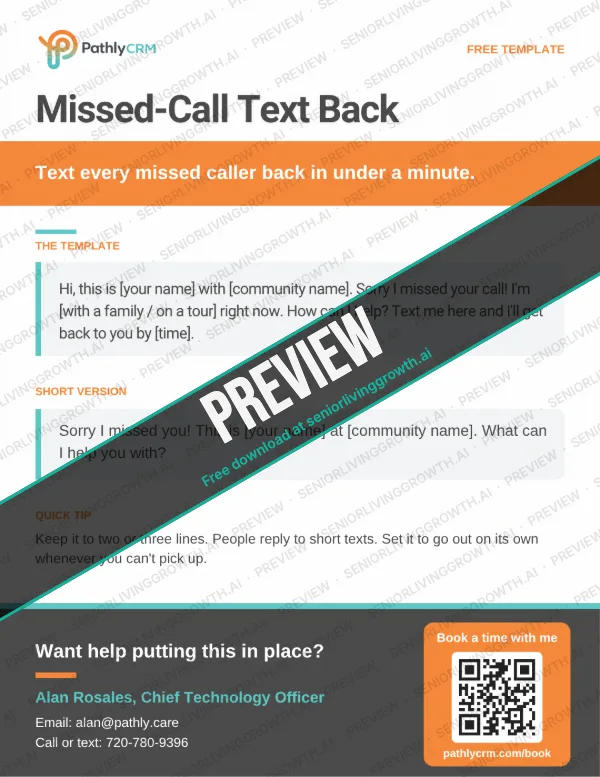
  • Text every missed caller

    When you can't pick up, send a short text right away so the family knows a real person will help them.

  • Keep your voicemail warm and short

    Say who they reached, when you'll call back and that they can text the same number.

  • Log every inquiry

    Write down the caller, their loved one, how they found you and the next step before you hang up.

Step 2

Book the tour on the first call

Learn their story, then give them a reason to visit.

  • Ask about the person, not the room

    Ask what a good day looks like for their mom or dad, what they love to do and what worries the family most.

  • Find out why now

    Something usually changed: a fall, a hospital stay or a family caregiver who is worn out. Knowing why helps you help them.

  • Offer two times

    Instead of asking if they'd like to visit, ask whether Tuesday at 2 or Thursday at 10 works better.

  • Invite everyone who helps decide

    Ask who else is part of the choice, like a sibling or spouse, and invite them to the tour too.

  • Send reminders

    A text the day before and an hour before cuts no-shows and makes it easy to reschedule.

Step 3

Give a tour they remember

Show them life here, not just the building.

  • Plan the tour around what they told you

    If dad loves to garden, start in the garden. Point out the things that matter to this family.

  • Let them taste and meet

    Time the visit with lunch or an activity, and introduce residents and caregivers by name.

  • Answer cost and care questions plainly

    Families want straight answers on price, levels of care and what's included. Clear answers build trust.

  • Agree on the next step before they leave

    Set the next step together, like an assessment, a second visit or a call with your nurse, and put a date on it.

  • Follow up the same day

    Send a short thank-you with an answer to a question they asked on the tour.

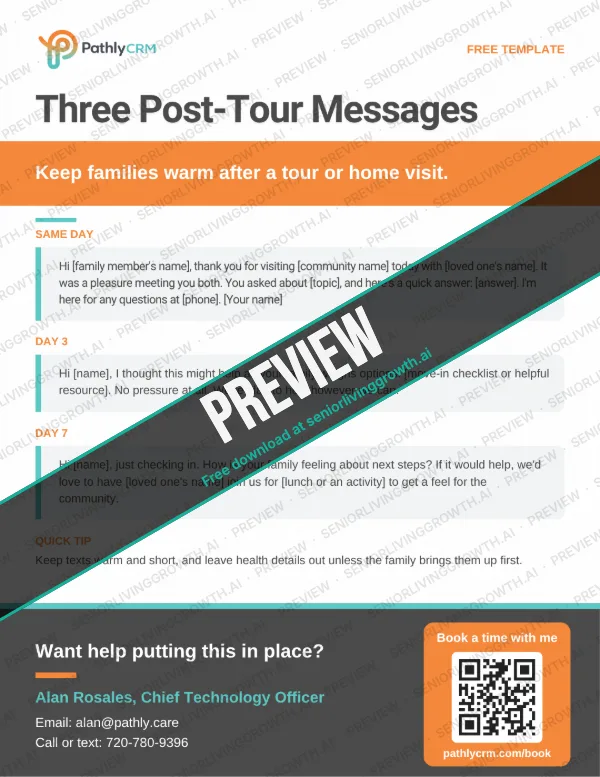
Three Post-Tour Messages free template for senior living sales teams

Free follow-up template

Three Post-Tour Messages

Step 4

Follow up until they decide

Most families need more than one touch before they choose.

  • Use a simple plan

    Same day, day 3 and day 7 is easy for the whole team to remember. Make every message helpful, never pushy.

  • Mix calls, texts and notes

    Different family members answer in different ways. A handwritten note stands out.

  • Share something useful

    Send a move-in checklist, a menu or a photo from an event they'd enjoy, not just a check-in.

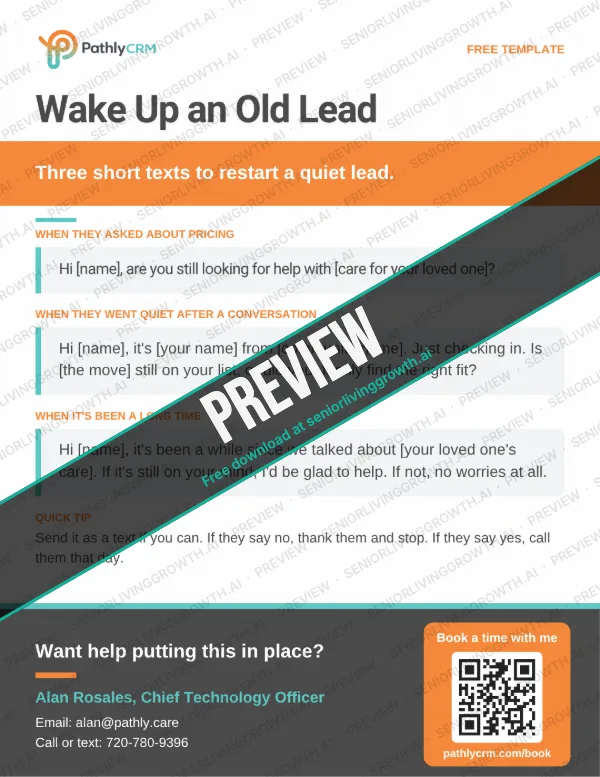
  • Wake up quiet leads

    A lead that went quiet isn't a no. A friendly check-in a few weeks later often restarts the conversation.

  • Close the loop kindly

    If a family chose another place, thank them and wish them well. Many call back, or send a friend.

Wake Up an Old Lead free template for senior living sales teams

Free follow-up template

Wake Up an Old Lead

Step 5

Grow referrals and reviews

Your best leads come from people who already trust you.

  • Know your referral partners

    Hospital discharge planners, hospice teams, home care agencies, placement agents and doctors' offices can all send families your way.

  • Visit with something useful

    Bring a one-page guide or an update on openings, not just snacks.

  • Thank every referral the same week

    A quick thank-you keeps partners sending families to you.

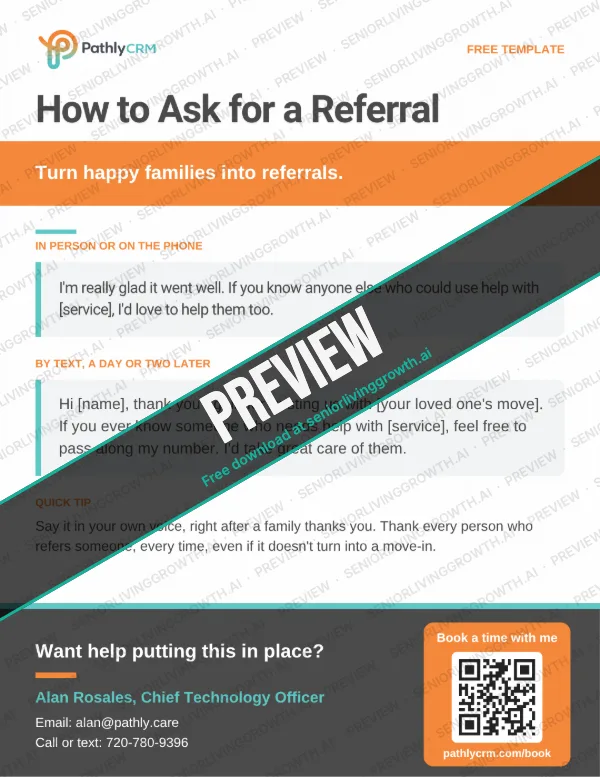
  • Ask happy families for referrals

    The best time to ask is right after a family thanks you.

  • Ask for reviews the right way

    Ask soon after a good moment and make it easy with a direct link. Never offer a gift in exchange for a review.

How to Ask for a Referral free template for senior living sales teams

Free referral template

How to Ask for a Referral

Step 6

Check your numbers every week

What you track gets better.

  • Count new inquiries by source

    Know which sources send families who actually tour and move in, not just who calls.

  • Track time to first reply

    Measure how long it takes to reach each new lead. Faster is almost always better.

  • Compare tours booked to tours held

    If many tours fall through, look at how tours get booked and whether reminders go out.

  • Write down why you lost a lead

    Patterns in lost leads show you exactly what to fix next.

  • Meet for 15 minutes every Friday

    Look at the numbers together, pick one thing to improve and plan next week's follow-ups.

Weekly Lead Tracker free template for senior living sales teams

Free tracker template

Weekly Lead Tracker

Discovery questions

Ask better.
Help more.

The best sales counselors talk less and ask more. These questions help a family tell you what really matters, so every step after that feels personal. Ask them, then listen and take notes.

Learn their story and why now.

On the first call

  • What's going on that made you call today?
  • Tell me about your mom (or dad). What does a good day look like for them?
  • What are they still doing on their own, and where do they need a hand?
  • What worries you most right now?
  • Who else is helping you make this decision?
  • When would you like a plan in place?

Find out what a good fit means to them.

On the tour

  • What would make them feel at home here?
  • What did you like most about the other places you've seen?
  • What would need to be true for this to feel like the right fit?
  • What questions are still on your mind before we talk next steps?

Handling objections

Hard questions.
Honest answers.

An objection is almost never a no. It's a family telling you what they're worried about. Thank them for saying it, ask a question to understand it, then help.

“It's too expensive.”

Usually means: they're comparing your price to the cost of staying home, not to the real cost of care.

Try this

Walk through what staying home really costs: in-home help, meals, home repairs, rides and the toll on family caregivers. Then show what's included in your monthly rate.

“We're not ready yet.”

Usually means: the move feels big and scary, and nothing has forced the choice yet.

Try this

Agree that timing matters, and ask what would tell them it's time. Offer a small next step, like lunch or a respite stay, and set a date to check back in.

“Mom doesn't want to move.”

Usually means: she's afraid of losing her independence and her home.

Try this

Invite her for a meal or an activity she enjoys, with no talk of moving. Let her meet residents like her. Talk about what she'll gain, not what she'll give up.

“We're still looking at other places.”

Usually means: they don't yet see what makes you different.

Try this

Encourage it. Offer a short list of questions to ask on every tour, then follow up and ask what they liked best. Remind them what fits their family here.

“I need to talk to my brother first.”

Usually means: other family members haven't seen what they've seen.

Try this

Offer to set up a call or video tour for the whole family. Send a short recap they can forward, with photos and pricing in one place.

“Can't we just get help at home?”

Usually means: they haven't weighed loneliness, safety and around-the-clock needs.

Try this

Be honest that home care is a great fit for some people. Then talk about nights, weekends, meals, friends and what happens as needs grow.

Habits that win

What top sellers
do every week.

01

Start with follow-ups

Before email or meetings, make every follow-up call and text that's due today.

02

Protect time for outreach

Block time each week to visit referral partners, even when the calendar is busy.

03

Update your tracker daily

Spend five minutes before you leave writing down every lead's next step.

04

Role-play once a week

Practice the first call and the hard objections with a teammate. It feels silly and it works.

05

Learn from every lost lead

Ask kindly why they chose somewhere else. Each answer makes you better.

06

Celebrate move-ins as a team

Share the wins with care staff, the kitchen and the front desk. Every one of them helped.

"After 15 years in sales, including four leading senior living sales and marketing, here's what I know: the teams that win aren't the ones with the fanciest building. They're the ones who call back first, listen best and follow up every single time."

Alan Rosales, Founder

Leads slipping through?

Happy to help set up instant text back and follow-up for your team.

For sales teams

More guides for
sales teams.

Start with these, then see the newest sales articles below.

See all sales articles

Questions

Good to
know.

What is senior living sales?

It's the work of helping families find the right community for someone they love, from the first call through the tour to move-in day. Done well, it feels like helping, not selling.

What are the steps in the senior living sales process?

Answer the first call, book the tour, give a personal tour, follow up until the family decides, grow referrals and reviews, and check your numbers every week.

How fast should we call back a new lead?

As fast as you can, ideally within five minutes. Families often call several places, and the first to reply is usually the first to get a visit.

How many times should we follow up after a tour?

Plan on at least three touches: the same day, day 3 and day 7. Then check in every couple of weeks until the family decides. Every message should be useful on its own.

What numbers should a senior living sales team track?

New inquiries by source, time to first reply, tours booked and held, move-ins and the reasons you lost a lead. A simple weekly lead tracker covers all of them.

How do you handle the objection that assisted living is too expensive?

Compare the monthly rate to the real cost of staying home, including in-home help, meals, home upkeep, transportation and the strain on family caregivers. Then show everything your rate includes.

Are these templates free to share?

Yes. Enter your name and email to download any template, then share it with your whole team.

Want follow-up done for you?

Never miss
another
lead.

Pathly CRM texts back missed calls, sends your follow-ups on time and keeps every lead in one place, so your team can spend more time with families.